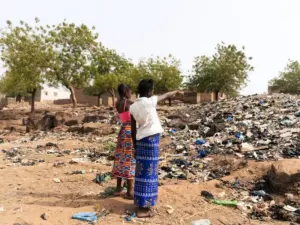
Identifies harmful environmental effects that could result during the life cycle of the proposed development.
Avoids, reduces, or mitigates potential effects before they happen.
Benefits of Environmental
Impact Assessment
Potentially harmful environmental effects of development projects early on.
Actions to avoid adverse environmental effectsor reduce them to acceptable levels before theyhappen.
Overview
We work closely with project teams to identify potential environmental and social risks/impacts, and develop inclusive, pragmatic and affordable strategies that avoid, mitigate and/or offset significant impacts and risks. We believe that our unique blend of technical and regulatory expertise, combined with extensive practical experience, distinguishes us from other consultants. Beyond adhering to national legislation, guidelines, and policies, our team often collaborates with various established frameworks. Drawing on our technical and regulatory expertise, coupled with extensive practical experience, our team supports clients in achieving technical optimization, enhancing environmental, social, and governance (ESG) performance, and delivering added value. We operate as one team and service clients from our international network of offices and local partners covering multiple countries in Africa, Americas, and the Southeast Asia. This global reach provides our team with an in-depth understanding of the broader ESG issues that are becoming increasingly important as our clients strive to develop and operate projects that meet the needs of all stakeholders including investors, lenders regulators, NGOs, communities and employees.
What is an environmental assessment and When should it happen?
An environmental assessment supports planning and decision-making. Through the environmental assessment process, the potential adverse environmental effects of a project are identified.
An environmental assessment should begin as early as possible so the proponent can consider the analysis for their proposed plans. For example, the proponent can incorporate mitigation measures into their work that will address the project’s potential adverse effects.
What are the benefits and purpose of environmental assessment?
Environmental assessment supports better decision-making by considering how a project’s design could be optimized to minimize or outright avoid negative effects on the environment. An assessment identifies a project’s potential effects. It also identifies a scope of factors to be considered, including mitigation measures. Thinking of these things early on in the project planning cycle gives proponents a chance to improve or revise plans.
Other benefits include:
creating opportunities for meaningful public participation and engagement with Indigenous peoples
advancing and addressing any potential impacts to Indigenous rights
increasing protections for human health
reducing project costs and delays
reducing risks of environmental harm or disasters lessening the probability that environmental effects transcend national, provincial or territorial boundaries
contributing to the responsible development of natural resources.
An environmental assessment supports planning and decision-making. Through the environmental assessment process, the potential adverse environmental effects of a project are identified. Examples of “adverse effects” are:
the loss or decline of fish, migratory birds, or marine plants
changes across a border between provinces the contamination of foods relied upon by Indigenous peoples
If a project is likely to produce adverse environmental effects, the environmental assessment identifies mitigation measures. Mitigation measures are actions or project design features that help to reduce, eliminate or control a project’s adverse effects. The environmental assessment also predicts if a project might cause significant harm to the environment even after mitigation measures are implemented. Where mitigation is not feasible, restitution measures (such as replacement, restoration or compensation) may be identified.
A follow-up program happens after the environmental assessment process. It verifies the accuracy of the assessment, and assesses the effectiveness of the mitigation measures.
Some of our accomplishment
Impact Assessement for the Africa Development Consulting Group in Ivory Coast
Impact Assessement for Guinea for the mining sector
Maritime Navigation Agency (Guinea) – Installation of lighthouses and navigational buoys in maritime waters.
Sanitation of regional capitals of Guinea – Consortium SOGEDEG and SNC-Lavalin. Funded by the African Development Bank for the Guinean Government (Conakry, Guinea)
Fundraising and Proposal Writing in Burkina Faso
Fundraising and Proposal Writing in Guinea
Fundraising and Proposal Writing in Ivory Coast
Fundraising and Proposal Writing in Mali
Bid Submissions in Cameroun, Mali, Guinea
Program for the Improvement of the Environment and Sanitation.
UNDP/World Bank and Guinean Government project on urban and rural environment. Conakry, Guinea
Please send us a brief summary of your need below!